


October 09, 2011
— Open Blogger A Smart Military Blog™ special feature on defense procurement.
Defense acquisition programs are FUBARÂ’d. I donÂ’t think thatÂ’s a big surprise to anyone here. Heck, when your programs are so bad they get the Star Wars treatment, youÂ’re in the hurt locker: Acquisition Lessons from the Dark Side
Sure, the .pdf is tongue in cheek. But it does raise some good questions about what we're doing when it comes to major weapon system programs. What is the last major weapon system you can think of that came in on time and under budget? I've been following acquisition programs since the early 80s, and I can't think of a single one. Oh, sure, several were ultimately quite successful. The Army's "Big Five" programs of the 1970s (M1 Abrams, M2/3 Bradley, UH-60 Blackhawk, AH-64 Apache and Patriot missile system) were all undoubtedly successful programs, but even they ran over budget, and in fact, each program was the successor to a program that had been cancelled for cost overruns and technical overreach. The Navy's very successful Spruance/Ticonderoga/Burke class ships were "austere" versions of ships that had been developed for over 20 years. And the Navy's F-14 and the Air Force F-15 fighters were both born out of the disastrous F-111 fighter program. Current procurement disasters include the Navy's LPD-17 class and LCS ship programs, the Army's aborted Future Combat System, and the Air Force/Navy/Marine Corps F-35 Joint Strike Fighter.
So why is it that buying weapons is so hard? First, weapons are incredibly complex. From a mechanical and even more from a software viewpoint, a weapon system such as the F-35 is a nightmare just to design. On the software front, if Bill Gates screws up and your Windows crashes, you lose the busty lesbian pr0n you were trying to save. When Lockheed Martin screws up, a $200 million fighter gets turned into a smoking hole in the ground. Debugging the software before market release takes time, and that means money.
Even worse, the process for simply defining what a weapon system should do is a nightmare. It used to be, when the Army decided it needed a new tank, it looked at what the last batch could do, then padded the numbers a bit, and asked the contractors to build a new one. When the Navy decided it needed a new ship, it got together the people that used ships and asked them what they'd like. Same thing with the Air Force. The Marines were screwed. Nobody asked them what they wanted. They got whatever the Navy and the Army were buying. All in all, it worked pretty well.
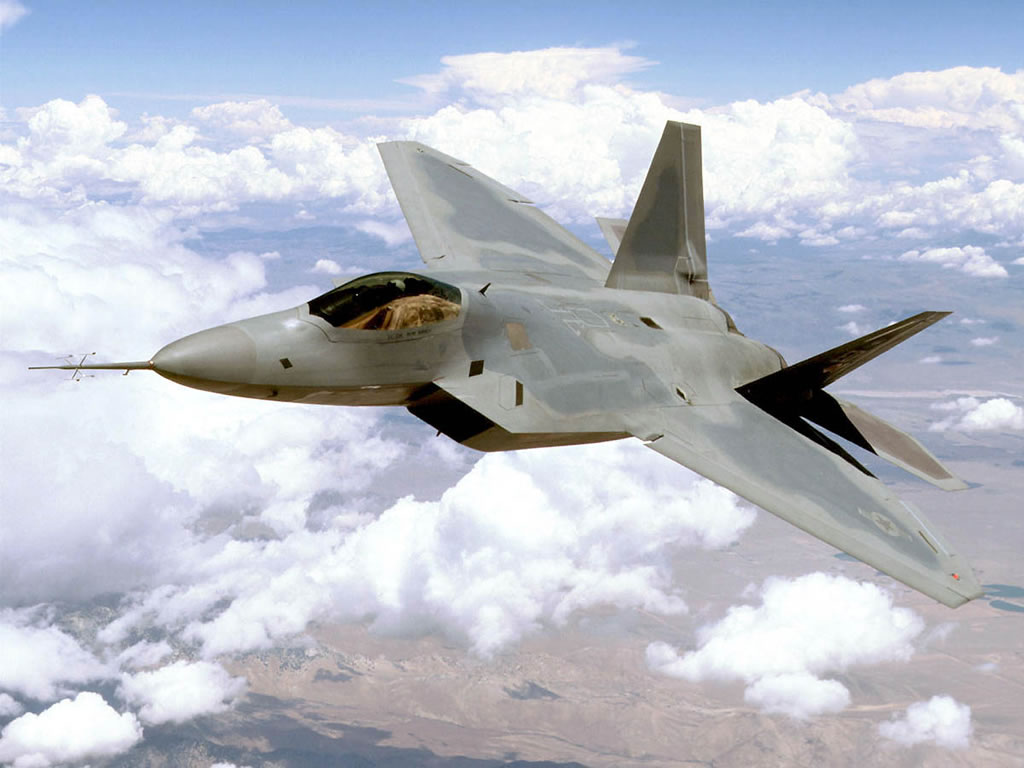 One of the great joys of Robert McNamara's revolution in the Department of Defense was his "operational analysis" applied to roles and missions. Instead of just letting the Navy buy a ship to do a mission that the Navy had always done, OA insisted that the mission had to be examined to see if one of the other services could better perform that role. This added a layer of complexity to buying weapons. It also had the knock on effect of adding to the complexity of the weapons themselves. You couldn't risk losing a fight over whether a plane was the right tool for a job. You had to make that plane so outstandingly capable that no other possible platform could even hold a candle to it. That drove up complexity, strung out development time, and in turn drove up costs. Rising costs leads to the "procurement death spiral." When the overall cost of a system rises, the end numbers of units bought gets cut. That in turn drives up the unit cost, which exerts great pressure to lower the cost of the program, usually by reducing the total number bought. Which drives up the unit cost...
Then there's the fact that we've made developing weapon systems as profitable for defense contractors as producing them. It used to be that the design and development team of a contractor was a cost center, an investment made in hopes of receiving a production contract. Now, the cost and risk of having a union production team means actually producing a system is often the cost center, and the juicy development contracts pay to support large engineering staffs. We've pervesely incentivized contractors to keep weapon systems in development as long as possible. Now, they aren't dragging their feet on purpose, but as long as they get development contracts, they aren't about to complain, either.
Finally, politics gets to play a role as well. Lots of money gets spent, and Congress controls the purse strings. That means many a Congressman wants to see defense contracts coming to his district. Whenever you hear a congressman mention the importance of maintaining our industrial base, it is a good bet they've go a contractor in their district that they think is critical. Maintaining the industrial base is important. But when Congress exerts influence to pick and choose winners and losers, the results are about what you'd expect.
Almost all major defense programs are competitvely bid. Now, you'd think that would lead to the best, most cost effective system being chosen. You'd be wrong. The ground rules of the competition aren't so simple as a head to head comparison of capabilities. Development costs, production costs, life-cycle maintenance costs and a myriad of other similar factors play a role in the competitions. Unfortunately, history has shown that the estimates of these future costs is mostly wishcasting. There just really is no way to accurately predict out-year costs for programs with life cycles of upwards of 50 years. Nonetheless, Congress, both directly and indirectly, has a huge influnence of the terms of the competition, and can use these and hundreds of other parameters to shade the rules so as to often almost predetermine the outcome for a favored client. Or worse, they end up setting up a competition that is so rife with loopholes that even when the service has a clear preference for one platform over another, the losing bidder can sue to demand a recompetition, delaying the development and procurement of any platforms. This happened so many times in the Air Force's program for a new Combat Search and Rescue helicopter that eventually the Air Force just gave up. The Air Force's next generation tanker program took over a decade and three complete competitions to decide on the Boeing KC-46 program. Dude, it's a tanker. We've been buying tankers since the B-29 was still in service, and they haven't gotten much more technically complex since then. Take an airliner, add a boom, add some extra gas tanks, you're done. It ain't rocket science.
So what are some successful procurement programs, and what do they have in common?
 Two programs spring to mind. First, the MRAP, or Mine Resistant Ambush Protected vehicle program. As the insurgency in Iraq heated up, and the low levels of protection on early Humvees became apparent, the Army (and to some extent, the Marines) were in dire need of vehicles that were less vulnerable to IEDs than early Humvees. Up-armoed Humvees were quickly produced and fielded, but there was limited room from growth on the basic vehicle. Building on designs pioneered in South Africa, several companies offered began building large purpose built trucks that were far more capable of withstanding IED attacks, and gave good protection from small arms fire. Indeed, the main complaint in the press was that the Army wasn't buying enough vehicles fast enough (never mind the shortages of armor quality steel and lack of production facilities and workers to build them any faster).
The other program which comes to mind was the Army's Stryker family of wheeled personnel carriers. The eight-wheeled Strykers were intended as an interim vehicle to provide units with some level of armor protection, but to be more easily transported and less expensive than fully armored units such as tank and Bradley equipped brigades. The Stryker was basically an off the shelf Canadian design with the Army's digital battlefield internet system grafted on. The concept was that the Strykers would serve short term until the definitive Future Combat System family of vehicles were available.
In the event, the Stryker program was actually a huge procurement program, and yet it was budgeted with very little controversy or public scrutiny. While the vehicle is hardly perfect, it was a very successful procurment program, mostly on time and on budget. The "definitive" Future Combat System vehicles, on the other hand, never even made it off the drawing board. The program was so bloated and behind schedule, costly, and so far from delivering any capability that it was scrapped.
Why were the MRAP and Stryker programs successful? They both were narrowly focused programs, designed to fit a very specific need. Further, they were evolutionary designs, building upon mature technologies. Neither program was “transformational” or “cutting edge” technically. The Stryker program did introduce new levels of digital integration to units, but the Army had been developing such systems for 15 years, and the systems are now common in all combat vehicle fleets.
Lessons learned?
- Set realistic program goals. Not every program can be a 30 year leap into the future. That's not to say research and development aren't important. But trying to develop critical technologies concurrent with the development of the weapon system programs that will use them is foolish. Inevitably, there are delays and difficulties in developing the underlying technologies, which delays the parent program. Changes in the developing technologies also means that baseline configurations can't be set, leading to constant changes in the parent design. This stretches out the development timeline, increasing costs.
- Settle for 80%. The MRAP, Stryker, M1, Ticonderoga/Burke, and F-14/F-15 programs all accepted that they were getting most of what the developers wanted, but not all. By settling for 80% of the capabilities they desired, the developers were able to freeze the designs, get them into production, and still achieve a great net increase in capability. The last 20% of desired capability ends up being gold-plating, and an outsized cost driver. Further, if that capability is later determined to be critical, it can usually be retrofitted. One example is the Commander's Independent Thermal Viewer on the M1A2 series tanks. It was omitted from earlier production for cost reasons, but provisions were made in the original design to fit one if later needed. Similarly, Vertical Launch Systems for Tomahawk missiles were added to later production Virginia class submarines, because space and weight was reserved for them (the same thing was done with the Los Angeles class subs twenty years earlier).
- Be ruthless in controlling costs. The easiest way to do that is to be ruthless in controlling the growth of a program. When the services propose a system, they have to get buy-in from various factions within that service. It takes a forceful leader to ensure the minimal amount of bloat occurs. The sooner in the definition phase a program manager can freeze the design, the quicker development and fielding of a platform. That alone works to keep costs down more than almost any other factor.
- Leverage existing technologies. Virtually every successful procurement program was based on existing technologies. The Ticonderoga cruisers used the hull and machinery developed for the Spruance class destroyers, and mated them with the Aegis weapons system that had been in development (in various guises) for almost 30 years. The F-14 program used the AWG-9/Phoenix missile system developed during the TFX/F-111 program as well as the TF30 engines.
We hear a lot about greedy defense contractors. And to be sure, they haven't covered themselves in glory. But the fact remains, they only sell what the DoD is buying. And they only develop what DoD pays for.
The acquisition framework is so complicated that simply defining what a system should do takes years. This stretched out procurement cycle drives costs up, which is ironic, since the stated purpose of the entire DoD acquisition architecture is to ensure that money is wisely spent. It is a classic case of paralysis by analysis. That's not to say strong oversight and justification isn't needed in procurement. But we need to strike a balance between oversight and actually developing weapons.
Finally, procurement in the last generation has been far too willing to accept unreasonable technological risk instead of reasonable risk to troops. It's impossible to fully remove risks to our troops, and attempts to do so by overreaching for technical solutions instead leads to troops using obsolescent existing weapons. The prime example of this would be the Marines and the MV-22. How many Marines died in CH-46 crashes waiting more than 20 years for the MV-22 to be developed, when a “good enough” replacement could have been bought in as little as a quarter of the time?
We owe it to the taxpayer and the troops to get our acquisition strategy under control.
Cross-posted at my place.
Published from draft by Andy
Posted by: Open Blogger at
11:00 AM
| Comments (37)
Post contains 2190 words, total size 15 kb.
Posted by: Tami-Cardinals fan at October 09, 2011 11:14 AM (X6akg)
Posted by: steevy at October 09, 2011 11:19 AM (fyOgS)
Posted by: steevy at October 09, 2011 11:22 AM (fyOgS)
Posted by: Dave in Texas at October 09, 2011 11:31 AM (PjVdx)
Posted by: Blue Falcon in Boston training for the ONT mudwrestling match at October 09, 2011 11:32 AM (ijjAe)
Posted by: rabidfox at October 09, 2011 11:35 AM (FROPA)
Didn't the origin of the MRAP actually come from a bunch of Army mechanics welding steel plates onto Humvees in Iraq? They did it because they were getting killed (literally) in the unarmored vehicles.
To see a government program fail in action, just watch them plan a government wide upgrade in computers. By the time they finish writing the specs, 6 generations of computer technology have gone by.
Posted by: GnuBreed at October 09, 2011 11:50 AM (ENKCw)
The Stryker isn't much of an exception: it was supposed to be a stopgap until FCS got built. I just remember how a lot of loudmouths talked trash about it, but the soldiers using them seemed to really like them- especially how quiet they are.
I think it makes sense to say that weapon specifications are better when they are coming from the field instead of offices in the Pentagon and Congress.
Posted by: No need to thank me- I enjoy being helpful at October 09, 2011 12:00 PM (zVHzM)
gronk know. gronk no fit windmill on club. windmill on club; club no work.
Posted by: caveman gronk at October 09, 2011 12:03 PM (OKhgI)
What if we just paid on a commission basis. $20 per Jihadi.
Posted by: cherry pi, terrorist hostage taking SOB at October 09, 2011 12:06 PM (OhYCU)
Posted by: XBradTC at October 09, 2011 01:31 PM (sHQ80)
Posted by: XBradTC at October 09, 2011 01:36 PM (sHQ80)
Posted by: Just One at October 09, 2011 02:12 PM (3T0+Y)
Posted by: XBradTC at October 09, 2011 02:15 PM (sHQ80)
Posted by: WTP at October 09, 2011 02:24 PM (4RFKN)
2 - Virginia SSN progam has been on budget & sked for a while.
3 - DoD eliminated a lot of in-house tech talent in the 90s. Peace dividend & attack of the MBAs. Did you know the Navy designed the Iowa-class battleships and other WWII warships? That capability is gone.
Posted by: butch at October 09, 2011 03:24 PM (UIbD4)
The MRAP is very successful but the Stryker is hardly so. The reason why it has been called a 'success' is because of the mania within the Army since Eric Shinseki ('Let's improve the morale of the troops not by better pay or living condition, but by giving them berets!' was Chief of Staff, for light wheeled AFVs. In fact, the Stryker failed some of the 'realistic' objectives for its procurement - it was originally intend to be deployable by C-130 while fully equipped kit. That did not happen, and the fact it is the US Army had to refit them with side shields to protect them against RPGs (Something that was a design requirement of the Bradley.) also is a strike against it for missions it obstensibly would be suited for - counterinsurgency and peace keeping. It certainly can not duel it out with real tanks and infantry fighting vehicles (Or even play run-and-gun with them.), and one of the lessons of Iraq was the advantage of having heavy cannons in your AFVs - the grenade launcher is better than a chain gun, but it is not better to other weapons.
Another thing about how messed up the procurement system is: it is much easier for the services to buy an 'improved' model of an existing system, even if it is completely redesigned (The F/A-18E/F Super Hornet has little similarity with the earlier F/A-18s.), over new systems because of the paperwork, competition, and congressional busy-bodies who enter the fray whenever a 'new' system
Posted by: allo12 at October 09, 2011 03:26 PM (ZGQLT)
Posted by: MauiOriginal at October 09, 2011 03:34 PM (lgGa6)
Another way to control development and procurement is to to control the number of those who have input on the project. The Bradley is a good example of this - because one Air Force (Not even Army.) officer felt he knew how to design an infantry fighting vehicle better than the Army personnel who had to use and put their lives on the line in it, got the entire project into controversy (And some selective media editing and choosing of the facts.) which smeared its reputation since that time. And the Air Force officer was and still is regarded as a hero for recklessly interfering in the Bradley's development!
The way the Navy use to (And still do to a certain extent.) was to send out the proposals for what the new weapon system was suppose to do to the various departments and agencies in the Navy, seeking feedback. That also applied when it came time to look at the actual design itself. Other opinions were carefully controlled (Intelligence got a lot of consideration because they said what the other guys were doing, and that was the point of designing a weapon, to fight the other guy. Most other people were not regarded as well.). Often the different departments fought each other, and compromises had to be made. But you got something that everyone at least could use in good faith. The Air Force was similar, while the Army was lacking in that area.
Posted by: allo12 at October 09, 2011 03:41 PM (ZGQLT)
I do have to say that, if wasn't so expensive, the idea of having screws-up in developing new weapons systems might not be so bad. You can improve a lot from learning how NOT to do things when developing a system. Many (Most) successful weapon systems used in the US military today came because we learned the lesson from previous failures in development, i.e. the Aegis system came because of the failure of the Typhoon, which was too technological ambitious and demanding for the time. By the time Aegis was developed, technology had improved and what was not feasible a decade before was possible now.
We also need to be willing to buy outside the US for our weapons. There are important advantages to having domestic sources of weapons, and we should strive for domestic production of said weapons, as well as using what works in foreign designs to improve future designs. But being willing to buy equipment from overseas if they meet our requirements better than what Boeing or General Dynamics are offering, for equal or lesser prices, will net better weapons for the military while spurring domestic suppliers to improve their offerings.
Posted by: allo12 at October 09, 2011 03:53 PM (ZGQLT)
Posted by: WTP at October 09, 2011 04:05 PM (4RFKN)
Posted by: Comrade Arthur at October 09, 2011 05:20 PM (mGnwL)
Posted by: Comrade Arthur at October 09, 2011 05:24 PM (mGnwL)
Posted by: XBradTC at October 09, 2011 06:37 PM (sHQ80)
The result was a revolutionary aircraft with a fly-away cost of $42-45 million each, a bargain at the time for a new fighter (well, light attack) airplane. Compare to the F-15E Strike Eagle, a ground-attack variant of the F-15 air superiority fighter in the same era, at $80 mil plus.
Posted by: Arms Merchant at October 09, 2011 07:30 PM (NZMKc)
Using off the shelf conponents may make success more probable but it doesn't guarantee it. Look at the Sergeant York DIVAD - a proven, successful, chassis, gun system, and radar. It could have been a success but integrating the systems into a new weapon system turned out so poorly that it was canned. This failure happened despite the Germans and Soviets having turned out successful designs for the same mission.
And all designs have teething troubles. The F-117 had them too, and it crashed a couple Nighthawks and killed several pilots doing so. Since the F-117 was built to handle missions no other aircraft could, the US Air Force continued working on it. I would say the Marine Corps feels the same way about the V-22, since it offers a replacement for the Sea Knight with capabilities that no other aircraft can match (At least for the Marines' ability to manuever inland from the sea.).
The Stryker was a high priority item of both the Army Chief of Staff and later SecDef Rumsfeld's transformation of the military. That helped speed its adoption.
On the other hand, Ballistic Missile Defense benefited tremendously from being a high priority item that could cut through paperwork and regulations. And that one is worthwhile.
Posted by: allo12 at October 09, 2011 08:19 PM (ZGQLT)
Posted by: Topper Harley at October 09, 2011 10:59 PM (9mbNo)
Aircraft Carrier, def: a rowboat built to DoD specs on Revision 332 of original plans.
Posted by: chuck in st paul at October 10, 2011 07:34 AM (EhYdw)
The government already owns the designs and the technology behind weapon systems. That's part and parcel of research and development being funded by the government - if the Air Force decides the new technology developed by Lockheed Martin should be used by Boeing, they can order it so and neither company can protest.
I'll go back to the person who talked about developing weapon systems in response to the needs of the battlefield. That works in emergencies but you need most of your weapons to be developed in anticipation of and before you get to the battlefield. Part of it is simple time because most development projects take years. Another is that soldiers on the battlefield have their own narrow perspective (Necessary to do their jobs and survive.) and don't have time to consider the data and intelligence about the larger picture and how a new system would fit in and fight against what the enemy will have. That was abig problem with US Army deverlopment and procurement in WW2, because the dominant philisophy was to build new weapons in response to what the opponents had, not a pro-active attempt to build weapons that the opponent was going get. That policy tends to cost a lot of lives.
Posted by: allo12 at October 10, 2011 07:36 AM (ZGQLT)
You just keep on trying 'till you run out of cake.
And the science gets done. And you make a neat gun
For the people who are still alive.
Posted by: GLaDOS at October 10, 2011 11:38 AM (m4+Rq)
Actually the only deaths were due to pilot issues. A couple of airplanes were lost for malfunctions, but mostly when the program was mature. One was a fire and the other was a structural failure, but both pilots got out. And none were lost in Desert Storm, where it debuted, although one was lost over Serbia
And yes, it was conceived for the war to come.
Posted by: Arms Merchant at October 10, 2011 06:56 PM (NZMKc)
Hide Comments | Add Comment | Refresh | Top
64 queries taking 0.2715 seconds, 165 records returned.
Powered by Minx 1.1.6c-pink.


Posted by: steevy at October 09, 2011 11:03 AM (fyOgS)