


August 04, 2013
— Open Blogger
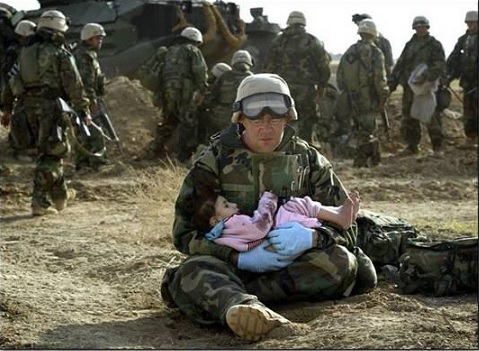
Evil, Murderous Oppressor of Brown People
Good morning morons and moronettes and welcome to the the award-winning AoSHQ's Sunday Morning Book Thread.
It's time to be proud to be an American again
OK, so when the U.S. military shows up to kill bad guys, how should the results be rated?
a) Unquestionably bad
b) Sometimes good, sometimes bad
c) Pretty good most of the time
If you're part of the Noam Chomsky/LuapNor Axis of Poo, or are sitting around waiting for your Obamaphone to arrive, you'll probably think the answer is (a). If you hear nothing but MSM accounts of the Iraq War and post-war phase, you might also be inclined to choose (a).
However, author Michael Banzet, a now-retired Air Force officer who spent his last tour in Iraq helping to rebuild the post-Saddam Iraqi Air Force, might want to have a few words with you. Not only would Mike choose (c), but he probably thinks it doesn't go far enough to describe the overwhelmingly benign influence of the U.S. military, even when its soldiers are doing their primary jobs, i.e killing people and breaking things.
Mike discovered that not many people seem to know about this, and one of the reasons is that the MSM simply did not report the good news coming out of Iraq.
So he wrote his book, A Flowershop in Baghdad, (available on Kindle and paperback) as a corrective. I'm mentioned this book in a couple of previous threads, but now I've finished reading it, so I can review it. It's full of amazing stories about what the American military personnel were doing to help rebuild Iraq, and this also includes accounts of some brave Iraqis who risked not only their own lives, but the lives of their families, just by showing up every day as students at the schools Mike helped set up to train the new generation of Iraqi leadership.
Think about this. We complain about going home from work because the rush hour traffic is bad. At least we have the expectation of getting home alive. But an Iraqi who is working close to the Americans might get ratted out to the terrorists and killed when he is outside the secure perimeter of his work environment. So many stay there all week, and when they do go home, they take randomly chosen circuitous routes so they won't be tailed.
The stories Mike tells are amazing, funny, and poignant, and sometimes all three. Especially the one I am about to repeat. I picked it because I think it best encapsulates everything Mike is trying to get his readers to understand about how beneficial the U.S. military's involvement in Iraq actually is, and how utterly at odds it is with how it got reported in U.S. media outlets:
Mike showed up at work one morning and all the Iraqis were upset and agitated about something and he was told thst a member of one of their families were taken at gunpoint by an armed group after first smashing in the door. Nobody yet knew who the snatchers were. It could have been terrorists, usually backed by Iran, or an ad-hoc Iraqi security force called the "Wolf Brigades". Or, it could have been Americans. So Mike goes out to make some inquiries about this, and was told there were no operations in the area where the relative was taken. So Mike goes back to the Iraqis, and they're not as agitated as before. He was then told that the armed men were using Humvees, so it most likely wasn't terrorists. Mike then goes out to make more phone calls, and again comes up with no information. Dejected, he goes back, wondering what he's going to say to the Iraqis and what they're state of mind they're going to be in:
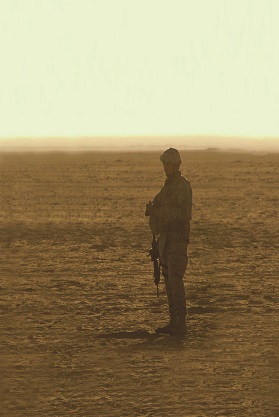
So, fully expecting the worst, I opened the door and walked in. To silence.
The guys were back at work, typing on the computers, drinking tea, and chatting. It was a Twilight Zone episode. I literally took a step back, absolutely flabbergasted by the bizarre world that I just stepped into. I stood there for a second, trying to get my bearings.
"Asad, what is going on?" Asad returned a quizzical look as an answer. I got a bit exasperated.
"Asad, what is going on? You were very worried for your family ten minutes ago, and now everyone is acting as if nothing happened. What is going on?"
Asad blinked as if something clicked. In that instant, I got the feeling that he realized that he had to explain something to me that was obvious to everyone else. His eyes crinkled into a soft grin.
"I'm sorry, my friend. It was the Americans."
Then he clapped me on the shoulder and returned to work.
Oh, hell no. I needed more of an explanation than that. We were the bad guys, right? We were the ones oppressing and exploiting the brown people by taking their oil. And here, in a clear-cut case of oppression or imperialism or, at the very least, racism, Asad didn't have the common decency to be mad about it.
I stopped Asad. "You said that they smashed in the door and took a relative."
"Yes?"
"Aren't you pissed?"
He gave me a little shoulder shrug and a noncommittal no. But, looking at my slack jaw, he saw that a little explanation was in order.
"Mike, at first we thought the people were attacked by terrorists, maybe from Iran, maybe from another country. They are very, very bad. They kill everyone, but first they make them tell everything. And then they get the next one and the next oneÂ…" His voice trailed off thoughtfully. "But then we thought it may be the Wolf Brigade, and that would be very bad, but not as bad. They hurt many people, but not all. There is hope if they are taken by the Wolves. Maybe one of the Shia here could call them and let them free. They don't like the Sunni, but one of our friends could talk to them. But the Americans. When the Americans take someone, they are safe. We are not worried about their safety."
"But aren't you mad that they break down doors and take people?"
"MikeÂ…" Asad looked at me for a while. "Not everyone is good. The Americans are sometimes wrong, but it is many times that an Iraqi has given them bad information. And sometimes, if they are very wrong, they will pay you to fix what they have broken. No Iraqi would do that. But the Americans-the Americans are mostly right."
I looked around at the scene. The regular murmur of office work going on. Samir had come out of the corner where he had bravely hid. He was grinning. "It was the friendly side!" he said, as if that explained everything. And to the Iraqis, it did.
As I said, I don't remember reading anything like this in the New York Times, Washington Post, or even a long treatment in one of those hoity-toity mags like Harper's or The Atlantic.
The only complaint I have about the book is that being primarily about military matters, there's a crap ton of acronyms used that my aging memory had difficulty keeping track of. I wish there were a glossary or appendix of all these terms, I could flip to when necessary.
FiB has a slight bittersweet taste: Not everyone makes it out alive. Mike both makes and loses friends with Iraqis and other servicemen stationed with them, and he has great respect and admiration for these brave men and women. And then there's the poltroons and sanctimonious know-it-alls, and he has to put with a bunch of them, both American and Iraqi. Those he mocks mercilessly.
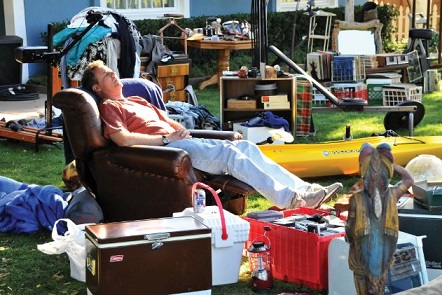
Moronette author Sabrina Chase e-mailed to tell me about the
The Human Wave Garage Sale
Which is going on right now. No, this isn't cut-rate sex trafficking. "Human wave" is a distinct sci-fi sub-genre. Of the "garage sale" itself, Sabrina says
a bunch of writing friends with a similar kind of outlook are doing a group promotion involving free or cheap (discounted) ebooks for a full week. It continues until August 8.
"Human wave" novels and stories are written with old-fashioned values in mind, like love, honor, courage, etc., rather than the fashionably post-modern negation of virtue, where the moral landscape is as dystopian as the actual landscape. In human wave stories,
the ennui of the cognoscenti no longer holds sway. The...characters might sometimes be trapped in dystopia but never helpless. And if they must go down fighting, they do so gloriously and for principles bigger than themselves.
Sabrina has compiled a list of human wave authors and the books they're offering at this garage sale, and rather than copy-and-paste it here, you all can go over to Sabrina's site and peruse it for yourselves. Me, I picked up the first book of Ms. Chase's Seqyoyah trilogy, The Long Way Home for $1.99. So go over to the garage sale and you're bound to find something you like.
___________
Books By Morons
This author, a former NBA cheerleader, is a "girls' night out" friend of moronette Jane Do'h. Ms. Do'h mentioned in a thread earlier this week that she writes murder mysteries. Lois' latest novel, Liquid Lies, has just been released. The story
is set in an affluent lake town in Wisconsin, and asks the question "Would you tell the truth, even if it meant losing everything?" In Liquid Lies, the main character Cecilia "CiCi" Coe has to answer that question, before anyone else is killed.
And you can't beat the $0.99 price for the Kindle edition
___________
Long-time lurker and occasional commenter artemis has a new book out. I mentioned it a few weeks ago, but it hadn't been release yet. But that was then. Murder in Thrall is now available on Kindle or hardback. It's a contemporary British murder mystery featuring first-year Detective Kathleen Doyle and her senior partner, Chief Inspector Michael Acton, a British lord turned cop.
Acton selects Doyle out of the newbie squad to partner with him on a series of investigations because she always knows when someone is lying - a trait that comes in handy when interviewing suspects and witnesses. Acton and Doyle are sent to investigate the murder of a trainer at a racetrack. Soon, new killings related to the first start unfolding, dragging the two into ever more perilous situations.
___________
So that's all for this week. As always, book thread tips, suggestions, rumors, and insults may be sent to OregonMuse, Proprietor, AoSHQ Book Thread, at aoshqbookthread, followed by the 'at' sign, and then "gee mail", and then dot you-know-what.
What have you all been reading this week? Hopefully something good, because, as I keep saying, life is too short to be reading lousy books.
Posted by: Open Blogger at
07:05 AM
| Comments (147)
Post contains 1829 words, total size 12 kb.
Posted by: zsasz at August 04, 2013 07:07 AM (MMC8r)
Posted by: Vic at August 04, 2013 07:11 AM (lZvxr)
Posted by: David at August 04, 2013 07:12 AM (6Oj/Y)
Posted by: Hrothgar at August 04, 2013 07:15 AM (XdnQT)
Posted by: steevy at August 04, 2013 07:16 AM (9XBK2)
Posted by: J.J. Sefton at August 04, 2013 07:16 AM (+98Gb)
Posted by: Bill at August 04, 2013 07:17 AM (uvyrw)
Posted by: Lizzy at August 04, 2013 07:17 AM (Lhux0)
Posted by: epobirs at August 04, 2013 07:19 AM (kcfmt)
Posted by: steevy at August 04, 2013 07:19 AM (9XBK2)
My summer reading list:
Liberation trilogy -Rick Atkinson; Civil War - Shelby Foote; Memoirs - Ulysses S Grant; Witness- Whittaker Chambers; Conservative Mind-Russell Kirk; Destructive Generation- Collier, Horowitz; Vision of the Anointed - Thomas Sowell - at least it is a goal - may need some light trash in between the heavy
Posted by: squirrel at August 04, 2013 07:20 AM (841my)
Posted by: J.J. Sefton at August 04, 2013 07:20 AM (+98Gb)
Posted by: Kort at August 04, 2013 07:21 AM (9+awa)
Posted by: BornLib at August 04, 2013 07:21 AM (zpNwC)
Posted by: sawhorse at August 04, 2013 07:21 AM (e1h7z)
Did you get that for the Kindle or in a dead tree version? There is a one star review for the Kindle version that says not all chapters came with it.
Posted by: Vic at August 04, 2013 07:24 AM (lZvxr)
I spent the week slogging through the middle part of "The Confidence Man" by Melville. After a point I took the Norton annotated version out of the library because I became too fucking frustrated with all his offhanded Shakespearean comments where I had no idea WTF he was talking about. Just when I'm ready to throw it through the fucking window, I'll hit a chapter where he'll step back and comment that the people in it existing in the thoughtosphere deliberately have no adherence to "real life" by design, which is kind of funny considering it was written in 1851. Still, everybody in my book group is sharing my negative opinion. We're scheduled to finish it for next weekend so I'll stick it out for that.
Posted by: Captain Hate at August 04, 2013 07:24 AM (eAQEs)
Posted by: Doug at August 04, 2013 07:26 AM (q3H4U)
Posted by: BornLib at August 04, 2013 07:26 AM (zpNwC)
Posted by: David at August 04, 2013 07:29 AM (6Oj/Y)
I am only 2 chapters in so will review it next week.
Posted by: Miss Marple at August 04, 2013 07:30 AM (GoIUi)
Funny how history changes when information is declassified and foreign archives open for examination. It amazes me how often stuff that was revealed in the last two or three decades is ignored, especially if it means the popular interpretation has to be reevaluated.
The Japanese internment, for example. To this day, a lot of people I meet still base their thoughts on this from what was taught in the 70s before the MAGIC decrypts were declassified. The internment was a painful piece of history but it cannot be ignored that it wasn't just racism at work. The Japanese government truly believed they had a network of operatives to do their bidding in the US, and some of those people may have gone into internment without ever breaking cover, even long after the war was over. We'll never know what the real threat was but as far as can tell, the schools rarely teach the full story to this day.
Posted by: epobirs at August 04, 2013 07:31 AM (kcfmt)
Posted by: David at August 04, 2013 07:31 AM (6Oj/Y)
Whatever his politics -- and he hides them well -- Toland was a good historian, and doesn't fill the story of the first six months after Pearl Harbor with revisionist bullshit.
I doubt the same can be said for more recent observers of that war, no matter whether they are liberal or conservative.
What Toland knew -- and modern writers conveniently forget -- is that facts analyze themselves. The heroes will always be heroes, and the bad guys will always be bad, no matter how much gingerbread is served up to reinforce the chosen narrative.
Posted by: MrScribbler at August 04, 2013 07:36 AM (/RIVS)
Posted by: BornLib at August 04, 2013 07:36 AM (zpNwC)
Thanks, I think I'll download it. I wonder why it is not on Gutenberg.
Posted by: Vic at August 04, 2013 07:37 AM (lZvxr)
Posted by: David at August 04, 2013 07:37 AM (6Oj/Y)
Posted by: wisenheimer at August 04, 2013 07:39 AM (cTHv4)
Posted by: Hrothgar at August 04, 2013 07:39 AM (XdnQT)
Posted by: Eton Cox at August 04, 2013 07:41 AM (QCc6B)
Posted by: Vic at August 04, 2013 07:44 AM (lZvxr)
Posted by: Vic at August 04, 2013 07:44 AM (lZvxr)
Posted by: Tuna at August 04, 2013 07:47 AM (M/TDA)
Posted by: BornLib at August 04, 2013 07:47 AM (zpNwC)
Posted by: epobirs at August 04, 2013 11:31 AM (kcfmt)
That would be raaacist!
The Japs were just about as anti-white as possible.
Posted by: Hrothgar at August 04, 2013 11:39 AM (XdnQT)
If you want a good book about the interment read "In Defense of Interment" by MM. Do not pay any attention to all the negative reviews. These are mobied up libtards trashing it for no reason other than they hate her and thing the internment was the greatest evil since the Spanish introduced slaves in America in the 1500s.
http://tinyurl.com/mzcsey9
Posted by: Vic at August 04, 2013 07:48 AM (lZvxr)
Posted by: David at August 04, 2013 07:48 AM (6Oj/Y)
Posted by: Polliwog the 'Ette, assault Hobbit at August 04, 2013 07:49 AM (dnqAI)
Posted by: David at August 04, 2013 11:48 AM (6Oj/Y)
I normally have to re-read old ones because I can't find reasonable priced stuff by authors I like. Having two (or 7) in the que to read for the first time is abnormal.
But I am retired.
Posted by: Vic at August 04, 2013 07:51 AM (lZvxr)
There appears to be room for three nations in the south Caucasus. Back then they were: Armenia (the elephant in this small room), Adharbayjan / Albania (now Turkic, then Udi), and Iberia / K'art'li / Georgia. Georgia, toward the north, was a bit more internally diverse, especially from Iranian peoples - like the Ossetians, who are still there.
Rapp makes the argument that the Caucasus after the Hellenistic period was culturally part of Iran. When its major princes converted to Christianity, their nations still told myths and legends on the Iranian model (this is also the model of "1001 Nights" and the "Shahnameh"). The Armenians held onto a *Parthian* monarchy until 428 AD.
Early Georgian literature was also oriented, so to speak, toward the Persians. When the Arabs took over the Near East the Georgians remembered it as the Arabs taking over "Baghdad" (and not Damascus, Jerusalem etc). The caput mundi of the Georgians was still Ctesiphon well into the 700s.
This changed in 800 AD-ish when an Armenian family, the Bagratids, moved north to Georgia and made a deal with the Byzantines. The Bagratids switched to the Georgian language, rather than keeping Armenian or adopting Greek, but they Hellenised the rest of the culture as best they could.
What sucks about this, for me, is that the Bagratids neglected to copy the old literature of the place unless they could use it. By contrast, the Armenians were much better at copying everything. That's why we have a contemporary history of the Arab invasions in Armenian ("Sebeos") but have close to jack shit in Georgian.
Posted by: boulder toilet hobo at August 04, 2013 07:52 AM (d7tB2)
Posted by: T. at August 04, 2013 07:55 AM (V+Gkh)
Posted by: BornLib at August 04, 2013 07:56 AM (zpNwC)
Posted by: Gem at August 04, 2013 07:58 AM (zw+pb)
Posted by: Sebastian Melmoth at August 04, 2013 07:59 AM (LkCGG)
The Spanish didn't introduce slavery to the Americas. They just took over and continued the widespread slavery that already existed. But I expect you know that.
I found it very interesting that the practice of slavery among the North American Indians followed almost the same North/South divide that would define the sides in the Civil War. The first slaves owned by Europeans in north America were purchased from the Indians who owned them first. It wasn't until it was discovered that Africans had a much better resistance to malaria, which came from Africa to the Americas in the first place, that it became a practical expense to import slaves from all the way across the Atlantic.
A world without malaria, or even a much weaker form of it, would have a very different history. But the same could be said for many other infectious diseases.
Posted by: epobirs at August 04, 2013 07:59 AM (kcfmt)
In the middle of "Drunk Tank Pink: And Other Unexpected Forces That Shape How We Think, Feel, and Behave", by Adam Alter. It's a treasure trove of tips and tricks on how to reach lo-fo voters (not that the author is admitting it). The chapters on names, lable and symbols was esp. mind blowing.
Now it's devolving into leftist propaganda (is that redundant?) with spin on certain psych experiments.
Also reading "American Gun," by Chris Kyle, as much a history lesson as gun tutorial and a fun read.
Posted by: RushBabe at August 04, 2013 08:00 AM (idNGj)
Posted by: BornLib at August 04, 2013 08:01 AM (zpNwC)
Almost done with "The Aristotelian" by Steve Poling. The difficulty here is that the book is written in the voice of Mycroft Holmes. This sets a very high bar; the language must be absolutely perfect, but it's not. It's close, mind you, but I've seen a "who" that should have been a "whom", a principle / principal confusion, inconsistent use of the Oxford comma (and inconsistent comma usage in general), many sentences that begin with "and" or "but" (most of which would be better rendered as a clause in the preceding sentence), and a constant switching between genuine dashes and double-hyphen dashes, among other things.
To be fair, the only thing that makes most of these eye-twitchingly bad is that the book attributes them to the hand of Mycroft Holmes. Perhaps Poling should have created a dimwitted sidekick for Mycroft to serve the purposes of plausible deniability...
Posted by: Anachronda at August 04, 2013 08:01 AM (U82Km)
Posted by: David at August 04, 2013 08:04 AM (6Oj/Y)
Posted by: epobirs at August 04, 2013 11:59 AM (kcfmt)
Not true. The Spanish dumped a load of slaves on the South Carolina coast and left them. They did not sell them was the only difference from what the Dutch did later. .
It is in this book somewhere. This book is used at Wofford as a History text.
http://tinyurl.com/lkztyrk
Posted by: Vic at August 04, 2013 08:05 AM (lZvxr)
Posted by: BornLib at August 04, 2013 08:05 AM (zpNwC)
Posted by: waelse1 at August 04, 2013 08:07 AM (zoxgk)
Posted by: Sebastian Melmoth at August 04, 2013 08:08 AM (hqMfv)
Posted by: BornLib at August 04, 2013 08:11 AM (zpNwC)
The Castilians were also preceded by the Portuguese who were trading slaves with coastal Africans and Arabs, generations before the unification of the rest of Spain but again, you probably know that...
Another point I'm beginning to wonder is how many of those slaves, on either side of the Atlantic, were actually *criminals*. If you're in a tribe living in a forest, life is nasty and brutal. It also gets shorter if you've got a couple of assholes raiding your foodstores. When you grab the assholes, what do you do?
You could imprison them, but then you've got to feed them. You could cut their heads off, but then you'll probably start a blood-feud with whatever family spawned them. Outcasting works when it's cold, but when it's tropical there's no winter for the assholes to freeze in - they just hang around and do more raiding. There's branding, flogging and mutilation but some people can't be reached. Enslaving them? Then you've got to feed them *and* watch them.
But sending them on a long voyage - now you're rid of the assholes and you've sent a message to their family, as well.
See also, "Australia"
Posted by: boulder toilet hobo at August 04, 2013 08:11 AM (d7tB2)
Indeed,
far too much vermitar for 3 glasses and Tabasco cold-cuts.
I'll see your slave encampments and raise you a Detroit suburb...........
Posted by: Richard...who cares at August 04, 2013 08:13 AM (BIKcN)
Posted by: T. at August 04, 2013 08:13 AM (V+Gkh)
SF publisher Tor has collected the original stories from their website into the ebook "The Stories: Five Years of Original Fiction on Tor.com". Free, but you have to register first to download. Available in pdf/epub/mobi.
https://tinyurl.com/okwnj6k
150 or so stories, many by name authors.
Posted by: Laurie David's Cervix at August 04, 2013 08:16 AM (kdS6q)
I had a problem with Pressfield's use of Arabic loanwords to describe the landscape of Arachosia and Bactria. There weren't any Semites in this remote patch of nowhere at the time, let alone Arabs.
It took me out of the scene and it made it too obvious that he was telling a parable, not a story.
Given that I'd read "Gates of Fire" before this, I was actually shocked that this author had written something so ham-handed and lazy.
Posted by: boulder toilet hobo at August 04, 2013 08:20 AM (d7tB2)
I don't know if that is specifically addressed in his book, but "Plagues and Peoples" by William H. McNeill is one of the best things you could ever read concerning diseases and their effects on human history.
I've read many a book over the years about diseases, and almost every author cites his book as the reason they got interested in the subject, not to mention inspiring many to become MD's.
Posted by: HH at August 04, 2013 08:20 AM (XXwdv)
Posted by: baldilocks at August 04, 2013 08:21 AM (Tnlh/)
Currently reading Ian Mortimer's "The Time Traveler's Guide to Elizabethan England".
Posted by: Tuna
Now in convenient TV form as a three part BBC documentary of the same name. Quite good and available thru your favorite file sharing methods.
Posted by: Laurie David's Cervix at August 04, 2013 08:27 AM (kdS6q)
Posted by: baldilocks at August 04, 2013 08:29 AM (Tnlh/)
I finished Tom Sharpe's "Indecent Exposure" and the ending wasn't much, almost an epilogue, but still, exploding ... I'll never tell.
Then I read a free mystery - "A Shot in the Bark" - I got via Book Gorilla which sends me a list of cheap Kindle books every day. I generally only get the free or $0.99 ones. Anyway, it was pretty good if only because I still don't know whodunit and it definitely kept me guessing. Suddenly I wonder if the author had made up her mind.)
Now I am reading another cheapie called "Final Argument: A Florida Courtroom Thriller" or something like that. I'm moderately annoyed that the main character had an affair with the dead guy's wife - can't guys in books behave? - but I mostly got it for the local color.
I need to finish "Beyond Belief" by Jenna Miscavige Hill, but I don't think I have time. Right now, I'd just as soon read mysteries.
Posted by: Tonestaple at August 04, 2013 08:31 AM (3yidV)
Boys and girls, rons and ettes, it is not my place to criticize anyone's typing, but pet peeve here:
interment = burial
interNment = what was done to the Japanese in America in WWII
I apologize for being annoying.
Posted by: Tonestaple at August 04, 2013 08:33 AM (3yidV)
Most of you "learned" folks sure as shit know that the Muslims were the benchmark for the designs of the slave trade back about when Mohamed was getting it on with his most recent pre-teen bride.........
jus sayin......
Posted by: Richard...who cares at August 04, 2013 08:35 AM (BIKcN)
Thanks for the FiB recommendation, I picked it up and checking out the Human Wave Garage Sale right now.
Posted by: DangerGirl, full of sweet rage at August 04, 2013 08:35 AM (GrtrJ)
Kris Jackson is another indy author I know of - and three of his books on Kindle are free for another day. Above the Fray is a two-volume novel about the Union Army balloon corps during the Civil War, and Love Strong as death is a mystery set around the Battle of Antietam. I've downloaded, haven't started to read them yet. Currently I'm going through two books that I have as advance review editions, so they're not out yet. (I'm an Amazon Vine Reviewer, so now and again I get the occasional good freebie.) One is Bill Bryson's One Summer: America, 1927, which I am about a quarter into, and enjoy very much so far. There was a LOT going on in that particular year, and Bryson makes it a very interesting and accessible narrative so far. The other is Countrymen, by Bo Lidegaard - about the Danish resistance to the Nazi attempt to round up Danish Jews during WWII. It's painfully thorough in setting the political scene, and outlining the backgrounds of the Danish and German officials who had something to do with it. I've only gotten to the part where word of the German plan to round up the Jews is just beginning to leak out, and so far, not very much about those ordinary individuals who escaped, or those who stepped up and helped them.
PS - Connie Willis' To Say Nothing of the Dog is fantastic and hilarious. I second or third any recommendations for it.
Posted by: Sgt. Mom at August 04, 2013 08:37 AM (Asjr7)
Posted by: Navycopjoe at August 04, 2013 08:37 AM (8sFfo)
Posted by: baldilocks at August 04, 2013 08:38 AM (Tnlh/)
Posted by: NCKate at August 04, 2013 08:41 AM (nYbxc)
I know that one of the earliest preserved foreign treaties from the Islamic world was a "baqt" with the Nubian government, in 652 AD. Guess what the Muslims asked of the Nubians.
Posted by: boulder toilet hobo at August 04, 2013 08:41 AM (d7tB2)
Posted by: Sebastian Melmoth at August 04, 2013 08:41 AM (KdfFa)
Posted by: David at August 04, 2013 12:04 PM (6Oj/Y)
Yeah! And you could sculpt a statue of Michelangelo...
Posted by: jwpaine @PirateBallerina at August 04, 2013 08:44 AM (/lWM8)
Posted by: Krebs v Carnot: Epic Battle of the Cycling Stars[/i][/b][/s] at August 04, 2013 08:46 AM (+5ahd)
Posted by: BornLib at August 04, 2013 08:48 AM (zpNwC)
The problem with that is that Alexander's armies didn't spend a lot of time in the Arab deserts.
The Persians sort-of did, through their Aramaic-speaking go-betweens. But their misadventure in (again) Nubia (back in Cambyses' day) kept the Persians out of the southern deserts directly.
Posted by: boulder toilet hobo at August 04, 2013 08:49 AM (d7tB2)
Posted by: Krebs v Carnot: Epic Battle of the Cycling Stars[/i][/b][/s] at August 04, 2013 08:49 AM (+5ahd)
It is 6500 nautical miles from San Diego to Manila. From Manila to Yokohama it is only 1750. The Japanese had air fields and refueling stations on many of the islands they took over after WWI. A years long amphib campaign through the central and southern Pacific was strategically and tactically necessary for the navy to advance to the Philippines with a relieving army. Otherwise the Japanese are would just whittle the fleet down bit by bit with air and sub attacks and then win the great fleet battle in Leyte Gulf in 1942 and we are out an army and a navy.
Posted by: the guy that moves pianos for a living... at August 04, 2013 08:49 AM (E3gqr)
I'm reminded of a movie set in WWII, based on a Kurt Vonnegut book (Catch-22?). There's a scene where a young US soldier is speaking to an elderly Italian native.
The old man explains to the GI, how Italy will "win by being defeated".
Which is pretty much what happened, isn't it?
Posted by: Optimizer at August 04, 2013 08:51 AM (Mxt9o)
Posted by: Lincolntf at August 04, 2013 08:52 AM (ZshNr)
Posted by: T. at August 04, 2013 08:55 AM (V+Gkh)
Posted by: the guy that moves pianos for a living... at August 04, 2013 08:55 AM (E3gqr)
82
Yet, we not only kicked their ass at Midway and Coral Sea.......
We also NUC'D them.......twice.......so much for THAT scenario.......
Posted by: Richard...who cares at August 04, 2013 08:56 AM (BIKcN)
Posted by: the guy that moves pianos for a living... at August 04, 2013 08:59 AM (E3gqr)
In the wake of "Plagues and Peoples," his son J.R. became the first "environmental historian." If he stayed in that wake, that could be good, but it's probably horrible. Has anyone read any of J.R. McNeill's books?
One bone I've had with McNeill's worldview - for 40 years now -- is his presumption that great cities enculture the hinterlands around them, which exist only to supply fresh meat (of many species) to the city-centre.
If you're teaching in Chicago at mid-20th cent., this will be a popular viewpoint, but Chicago itself proves the notion false. Great cities "exist" to provision the hinterland, not vice versa. One visit to the corner of Homes and Arthington will convince you.
Posted by: comatus at August 04, 2013 09:00 AM (JNUY4)
Posted by: Retired Buckeye Cop at August 04, 2013 09:04 AM (pHY57)
It's Dismal Science Time!
"The Great Degeneration" by Niall Furgenson is short and bitter - we've become what Adam Smith called a "stationary society" where rent-seekers and political factions have so tied up society and that the economy and civil society withers and progress is no longer possible. Think the West becomes Mandarin China.
"Depression, War, and Cold War" by Higgs is a technical look at the US economy leading up to, during, and after WWII. He traces the origins of the military-industrial complex to the command economy established by the New Deal people working with Big Business people.
On the other hand, I'm doing a book review for a dead tree magazine on "Nuclear Energy Leadership: Lessons Learned from US Operators." Nuclear plant owners crack the whip and get real after Three Mile Island. Lessons here for the oil and gas industry; published by PennWell.
Posted by: Whitehall at August 04, 2013 09:07 AM (k876Y)
Posted by: Polliwog the 'Ette, assault Hobbit at August 04, 2013 09:08 AM (TqWnD)
I'll give you a short review of the real thing. A lot of largely useless and very expensive mods forced by the NRC. The things that did improve were improved training, including the use of Simulators, and improved Emergency Procedures.
Posted by: Vic at August 04, 2013 09:11 AM (lZvxr)
Once the arsenal of democracy got its ass in gear, WWII became, in hindsight, a foregone conclusion. For the first two years of US involvement though, "acquisitions" was a real issue. It always bothers me that the arsenal of democracy no longer exists.
Posted by: comatus at August 04, 2013 09:14 AM (JNUY4)
Posted by: tomc at August 04, 2013 09:15 AM (avEuh)
Posted by: Michael Hooten at August 04, 2013 09:15 AM (WsORg)
Posted by: Vic at August 04, 2013 09:20 AM (lZvxr)
Posted by: BornLib at August 04, 2013 09:23 AM (zpNwC)
It was a sticky problem that the navy chewed on for years before the war and never did come up with a workable solution. Probably because there wasn't one given the tools available.
Posted by: the guy that moves pianos for a living... at August 04, 2013 09:28 AM (E3gqr)
"The Moro War" by James R. Arnold. At the end of the Spanish-American War the U.S. came into possession of the Philippines and in the process inherited Spain's war with the locals.
In the southernmost islands, specifically Mindanao, much of the population was Muslim having been converted by Arab traders in the 15th century. This little known episode in American military history represents the first time a land war had been conducted against Islam and things have not changed much since.
History buff morons would do well to spend their nickel on this volume.
Posted by: Libra at August 04, 2013 09:29 AM (GblmV)
Posted by: waelse1 at August 04, 2013 09:32 AM (ioNsG)
Posted by: Hrothgar at August 04, 2013 09:36 AM (XdnQT)
You speak a lot of truth
"I'll give you a short review of the real thing. A lot of largely useless and very expensive mods forced by the NRC. The things that did improve were improved training, including the use of Simulators, and improved Emergency Procedures."
My take was deregulation. Once management got bonuses for steady production and high capacity factor, important to profits, they got serious about maintenance, error-reduction, training (as you noted), and corrective actions.
Add in a new nuclear liability law that could charge EVERY nuclear plant up to $100 million a year for a screwup at ANY nuclear power plant, the whole industry really got serious about supporting collaboration and beating up the weak sisters and the bad actors.
The book is a bit of mush, talking about amorphous "safety culture."
Posted by: Whitehall at August 04, 2013 09:38 AM (k876Y)
Posted by: Whitehall at August 04, 2013 01:38 PM (k876Y)
I hope that they are not writing that. Following TMI regulations increased by the bookcase full. They literally exploded over night. And like the call for Mods, 99% of them were entirely useless and expensive.
And I never heard of this $100M nuclear liability law. I do know that every year ANI reviews your operating history and does a fire protection tour of the plant. From that they determine what your rates for the upcoming year are.
Posted by: Vic at August 04, 2013 09:42 AM (lZvxr)
The Iraq story is indeed bittersweet - no, make that infuriating - and the plaintive comments about the world not knowing the true story in Iraq are so understated.
I lived part of this myself for several years, but to make it worse, was in constant direct contact with the press there. There were very good reporters, and some OK ones - but with a few exceptions, the organizational pathologies (clueless, anti-American, Vietnam-era idiot fascists) dominate the editorial chain, so even the good stuff rarely got out cleanly. I have hard-to-believe and sickening experiences of reporters showing me their dispatches (within the last few hours), and comparing them to what was published by their organizations online - and the reporters furiously jumping up and down and complaining. Mostly the younger ones, often non-American.
My favorite was an Indian guy working for AFP. The day after the Zarqawi hit (for a while that Jordanian psycho was the hot ticket "insurgent/AQ in Iraq" personality hunted by the Coalition), this guy comes to me and, unprovoked, launches into a tirade (perfectly correct and sensible) about the outrageous "coverage" being done by AP. AP was running absurd quotes from locals who said they thought US personnel had choked Zarqawi on his litter (of course they were trying to revive him - amazing he had a pulse after being a in a house leveled by a couple 500-pounders). So this foreign journalist is raging against the idiocy and moral slander of the US press agency, I was just nodding in agreement, and deciding not to tell him my own unbelievable story about the AP bureau chief's behavior and attitudes on another matter.
Anyway, the complete, pristine moral inversion of the whole Iraq story (from rationale for the operation, to its conduct, to the practical and moral landscape of the conflict 2004-2007) by the western media, its acceptance by many (most?) Americans (both elite and rank and file), and the failure of anyone in a responsible position to correct the record and defuse the delusions pretty much ended my respect for the country and any serious optimism for what is right and good.
You've never lived until you've had to suppress a dark laugh when answering a foreigner's sheepishly offered questions about something in the US, in which the foreigner is completely correct, and is puzzled why things they learned from us or already admired about us are contradicted by things Americans are doing (post-Soviet journalists wondering media distortion in the US press, Iraqis delicately asking what the hysteria was about in New Orleans during Katrina, just a slow-moving flood after a big rainstorm, etc.).
Oh - and I love to remember how we Americans (not the kind to whine much anyway, but still) would never feel like we could bitch about our conditions when our Iraqi employees literally risked their lives everyday just to commute to the International Zone. And then I come back and see firemen/EMTs holding up banners on election days pushing local propositions to, basically, give them even more money. 2003-2013 weren't 10 years to me - they were 1,000 years, and that's how distant my respect (or real concern) for the country seem now ....
Posted by: non-purist at August 04, 2013 09:44 AM (afQnV)
Posted by: Tony S at August 04, 2013 09:46 AM (Mr4OG)
If you can only eat what you kill, you stay in shape to fight.
The post-Fukushima mods were not as bad but they still ordered backfits that will require backfits to the backfits. For example, filtered containments - the science is way lacking.
Posted by: Whitehall at August 04, 2013 09:59 AM (k876Y)
Posted by: Whitehall at August 04, 2013 01:59 PM (k876Y)
I don't understand what you mean by that term.
Posted by: Vic at August 04, 2013 10:03 AM (lZvxr)
Posted by: comatus at August 04, 2013 10:08 AM (JNUY4)
Posted by: Anachronda at August 04, 2013 10:09 AM (U82Km)
A merchant generator sold its power output under contract to a wholesaler. If the price agreed to was $50 per megawatt-hour, when you made a million megawatt-hours at the bus bar you got $50 million revenue. If you made zero megawatt-hours, you got nothing.
Power sales contracts area bit more complicated than that but the emphasis is on making electricity, not gold plating your plant.
Posted by: Whitehall at August 04, 2013 10:17 AM (k876Y)
Posted by: Ray Van Dune at August 04, 2013 10:28 AM (qIFL7)
No utility has been "economically deregulated" by that definition. CA, thanks to ENRON, is probably the closest and they have the most screwed up system in the country. The last time I had data available their rates were roughly twice the average in the country. Rates are still set by the PSC and they quit giving the utilities the "rate of return" long before TMI.
Posted by: Vic at August 04, 2013 10:35 AM (lZvxr)
I didn't mean to imply that the distribution utility is deregulated, but the generation side has seen a lot of it. The transmission and distribution parts of the electric utility business are always, to my knowledge, rate of return since they remain natural monopolies.
The first deregulated plant in the US was the Diablo Canyon nukse in California but it has returned to something like the classical rate of return model. All of Exelon's nukes are merchant plants. South Texas Project's two units sell to power wholesalers on a fix price per unit production basis.
Posted by: Whitehall at August 04, 2013 10:45 AM (k876Y)
As for CA, that Diablo Canyon plant will be shutdown sometime I soon if I am not mistaken, And they already import almost half of their electricity.
CA is a doomed State and would have already been bankrupt if we the taxpayers had not been buying their worthless bonds.
Posted by: Vic at August 04, 2013 10:50 AM (lZvxr)
Posted by: occam at August 04, 2013 11:00 AM (71sq+)
40 Apart from webcomics, I've been leafing through Stephen Rapp Jr, "Studies in Medieval Georgian Historiography".
...
Posted by: boulder toilet hobo at August 04, 2013 11:52 AM (d7tB2)
I'm late to this thread, but I'd love to know how to get a copy of this for less than $157 (abe.com). email in name
Posted by: sinmi at August 04, 2013 11:00 AM (TuiTY)
Posted by: occam at August 04, 2013 11:01 AM (71sq+)
"De-regulation" is that NOT the same as "no regulation." Regulations on the economics of nuclear plants have been relaxed but, as you implied, not eliminated.
Those rate regulation changes have changed management incentives.
Don't confuse Diablo Canyon on the Central CA coast with San Onofre near San Diego. The latter was recently permanently shutdown by its owner,
Posted by: Whitehall at August 04, 2013 11:04 AM (k876Y)
Posted by: Jack at August 04, 2013 11:36 AM (gWHwW)
occam, or who ever you are, you're an ignoramus that most certainly has never flown anywhere, and get your "knowledge" of the world from such as NPR and the NYT
And you obviously don't know Iraq, not even a little. Perhaps you can tell me how the intel service in Iraq is "best friends" with Iran, and give recent examples of this. Ridiculous.
The mistakes made under Bush (ending the occupation way too early, allowing the situation to develop where the other side had much leverage in a SOFA) don't change the strategic or moral facts, even a little. Which are some of the things addressed by the OP. The only tragedy is that clueless parasites like you benefit from all that is good in the US, while understanding none of it, and striving to slander and undermine it. Verminous, really.
Posted by: non-purist at August 04, 2013 11:41 AM (afQnV)
Posted by: .87c at August 04, 2013 11:45 AM (TQLvG)
Sorry for the delay. I had to go take someone to the airport.
Two books, '1491' and '1493' by Charles Mann are highly recommended as overviews of the most recent understanding of pre- and post-Columbian America. The bibliography also serves as a good reference to works that focus on specific areas in greater detail.
Much of '1491' is concerned with how the knowledge of the pre-Columbian period has evolved as new information has been uncovered. The long running debate over when humans first came to the American continents. Or the role of rampant disease in devastating the native population of the interior decades before Europeans reached in that far, thus leaving it for archaeologists to discover centuries later evidence of larger and more complex societies than had previously been believed to exist here. The European explorers of the era had no idea what they'd accidentally wrought, and since the natives had little or no written records, by the time Europeans reached deep within the continent they only found badly diminished tribes with only vague knowledge of what had happened in their grandparents' and great-grandparents' time. This is another way in which disease loomed large in shaping history.
One of the books referenced by Mann is 'Mosquito Empires: Ecology and War in the Greater Caribbean 1620 to 1914' by John Robert McNeill. I have it in EPUB and MOBI but haven't read it yet.
Posted by: epobirs at August 04, 2013 11:53 AM (kcfmt)
Posted by: biancaneve at August 04, 2013 12:03 PM (6bYlh)
Vic, slave is not a synonym for African. The Indians were actively enslaving each other before any Europeans came on the scene, with more Europeans or any other ethnicity in chains.
Posted by: epobirs at August 04, 2013 12:09 PM (kcfmt)
Posted by: epobirs at August 04, 2013 04:09 PM (kcfmt)
If I remember correctly what Edger said about the "Africans", who were bought by the Spaniards as slaves, were that after they were dumped on the beach they disappeared into the woods and were never seen again. Mostly likely killed bu the natives.
And Walter Edgar did categorize them as the first slaves to hit the North American continent. He is a noted historian.
Posted by: Vic at August 04, 2013 12:18 PM (lZvxr)
Sure... you can use Google Books for the overview, and you can live 20 minutes from a state university library for the rest of it :^/
Sorry I don't have a better answer.
Posted by: boulder toilet hobo at August 04, 2013 12:24 PM (d7tB2)
It was for the Umayyads and early `Abbasids: "`ubbad", "zanji".
Later on, Slavs were more popular on the market, hence the word we inherited in English.
Posted by: boulder toilet hobo at August 04, 2013 12:26 PM (d7tB2)
Whitehall and others, WTF with San Onofre? Forty years of nominal service life - just flushed down the drain? Yes, idiotic CA is trying to see if supply and demand really, really work the way they used to teach it in introductory micro.
But WTF?
If the local enviro-nazis prevent a thermal plant from being built, how long before the punitive, irrational electricity pricing will start to be noticed by even the cretinous voters/consumers of CA?
Posted by: non-purist at August 04, 2013 12:27 PM (afQnV)
He may be a noted historian but he is either being taken out of context here or he is wrong. That slavery was practiced among the North American Indians before European contact is quite well established.
Posted by: epobirs at August 04, 2013 12:32 PM (kcfmt)
Srs question here: was this industrial-scale slavery, or the tribe taking on a bit of "involuntarily hired help"?
My impression was that even the Aztecs didn't enslave the rival tribes to the level that, say, the Arabs did for the Zanj or the Europeans in the Caribbean. There wasn't a plantation system for a start.
Posted by: boulder toilet hobo at August 04, 2013 12:36 PM (d7tB2)
He may be a noted historian but he is either being taken out of context here or he is wrong. That slavery was practiced among the North American Indians before European contact is quite well established.
Posted by: epobirs at August 04, 2013 04:32 PM (kcfmt)
Neither one of us said they didn't. In fact I think he mentions that in the book. I think his point was this was the first African slaves in North America. They were bought or stolen to be slaves and the Spanish ship dumped them because they were short on water or some kind of supplies.
Posted by: Vic at August 04, 2013 12:37 PM (lZvxr)
SCE bought replacement steam generators (major components) from Pick-n-Pull rather than OEM. They started to wear out way too early.
In fairness the Japanese supplier of the replacements extrapolated just a bit too far on the design and found some new flow regimes they hadn't earlier understood.
They could be fixed and the plant put back in service.
But I knew that the fix was in for closure when Senator Barbara Boxer started demanding CRIMINAL investigations of San Onofre management people. With that knife to the throat, the owners just hung it up. They will be able to pass on most of the costs resulting to the rate payers anyway so little loss - to SCE.
Good question as to where the replacement baseload power is supposed to come from. Maybe new coal plants in Nevada?
Posted by: Whitehall at August 04, 2013 12:38 PM (k876Y)
Posted by: John the Baptist at August 04, 2013 01:04 PM (ul3m4)
Did your thesis make a big splash?
Posted by: boulder toilet hobo at August 04, 2013 01:35 PM (d7tB2)
I tried to swat that mendacious turd earlier but my IP was temporarily among the banned from this fine software.
Posted by: Captain Hate at August 04, 2013 01:41 PM (LRLUQ)
Thing is, if you specifically mean African slaves, you've got to say African slaves. Otherwise, it comes off as contradicting the post you were replying to with the resulting back and forth.
Without malaria the African population of the Americas would be very different as it would be primarily composed of people who came by their own free will. The portion of the population would likely be considerably smaller and far fewer people would have any recent African ancestry. OTOH, there would also have been a very different treatment of the native population, for better and worse.
Trying to track all of the historical changes for something like an alternate history novel is mind boggling. The cultural differences of a modern US where a major segment of the population never existed gets pretty out there. Do the native influences become more pronounced? Is it a lot closer to Europe with less of the distinctions we associate with the US?
Posted by: epobirs at August 04, 2013 01:47 PM (kcfmt)
Posted by: epobirs at August 04, 2013 05:47 PM (kcfmt)
I don't think so. The Lord Proprietors established SC purely as a "for profit" colony that they wanted to model after the sugar cane colonies in the carribian which were making money hand over fist. (at the time sugar was worth more than gold oz for oz) They were doing that with African slaves and the Lord Proprietors intended at some point to bring them in for that.
The problem with trying to research slavery in the US is that it is almost impossible to find honest research on it. Almost everything you find is propaganda from the left.
And lets not forget that slaves were not limited to the South initially. They were all over the colonies and initially SC was the only colony that had a problem with malaria and that was limited to the coastal regions near Charleston.
If you want to find something that would have limited slavery or ended it look to further than the cotton gin. If that had not come along slavery would have probably died out because until that was invented it was simply not economically profitable.
Posted by: Vic at August 04, 2013 01:58 PM (lZvxr)
Posted by: John the Baptist at August 04, 2013 02:12 PM (ul3m4)
Posted by: NCKate at August 04, 2013 02:29 PM (nYbxc)
Posted by: NCKate at August 04, 2013 02:51 PM (nYbxc)
Posted by: John the Baptist at August 04, 2013 02:55 PM (ul3m4)
Posted by: sinalco at August 04, 2013 10:28 PM (7580N)
Hide Comments | Add Comment | Refresh | Top
64 queries taking 0.224 seconds, 275 records returned.
Powered by Minx 1.1.6c-pink.


Posted by: Vic at August 04, 2013 07:06 AM (lZvxr)