


May 06, 2013
— Pixy Misa
- Israel Bombing Targets In Syria
- More On The Benghazi Cover-up That Should Sink Clinton's Career But Probably Won't
- Bill Richardson Doesn't Think Ted Cruz Is A True
AryanHispanic
- German Finance Minister Who Launched The Euro Calls For Currency To Be Broken Up
- Snell: Waking The Dragon And Why We Can't Have A Real Conversation About Guns
- Will Enough People Sign Up For Obamacare?
- The Day Distance Disappeared
- Good: Law School Applications Have Dropped To 54,000 Annually From 100,000 In 2004
- EPA Report Shows Fracking Is Greener Than Once Thought
- Ironman 3 Has The Second Highest Opening Week Ever
- WaPo Suffered An 85% Drop In Earnings
- Bill Ayers Claims To Be Against Violence
- The Immigration Bill Gets Worse And Worse As More Details Come Out
- When Will America Burst D.C.'s Bubble
- Great Gatsby Review
- Remember, They Just Want Common Sense Gun Laws
- The Dark Night Of Fascism Is Land Again, Can You Guess Where?
- Cemeteries Don't Want To Burry Tamerlan
- AP Claiming Teen Angst Played A Role In Boston Bombings
- Obama's Commencement Address In Ohio Is Just Another Campaign Street
- I Wish This Was A Real TV Ad In The SC-1 Race (auto play video)
Follow me on twitter.
Posted by: Pixy Misa at
05:48 AM
| Comments (225)
Post contains 207 words, total size 4 kb.
— Monty

UPDATE: Why Friday's job report was ominous. All those fabulous new jobs His Majesty the King was bragging about are mostly low-end part-time jobs.
UPDATE 2: Don Boudreaux lays the lumber to a fat pitch and mashes it over the centerfield fence: "I Do Not Care About Income or Wealth Inequality".
Worrying about income (or wealth) differences as such has always for me smacked of childishness. ItÂ’s envy elevated into public policy. IÂ’m sure that it has something to do with how I was raised, but the very thought of fretting about how much money other people make relative to what I make has always seemed to me to be grossly impolite, anti-social, pointless, corrosive of oneÂ’s character, and in horribly bad taste. This was so for me for as long as I can remember, even when my income was very low by American standards.
I posted a rather gloomy prediction about the 21st century labor market on Saturday. Kevin Williamson (of National Review's Exchequer blog) has a different take on the situation -- not so much a rebuttal as a more optimistic take on what the long-term prospects are. Williamson's idea, boiled down, is that market capitalism will survive our era of lousy governance and thrive in the post financial-crash world that will follow. But it is important to note that both he and I agree on one thing: we're facing a hell of a lot of pain in the short to medium term.
Democracy's death by welfare. The whole idea of the tax-funded sovereign-controlled welfare state was flawed, but it took a century or so for the really intractable problems to emerge. Democracy may have had its day in the sun (a point Donald Kagan advances) as people find the twin burdens of responsibility and fiscal continence too much to bear, and when the obituary for the democratic form of governance is written, it will be noted that it was the welfare state and not a conquering enemy that did it in.
A case in point: New York City now spends more money paying retired cops than they do paying active-duty cops.
Europe bleeds out. I confess that I am shocked at how long Europe has been able to avoid the wages of their Euro folly. The fiasco has dragged on for far longer than I had thought possible. It just goes to prove Adam Smith's legendary observation that there is a lot of ruin in a nation. Though I suppose that is cold comfort to the Greeks, Irish, Spanish, Cypriots, and Portuguese.
CNBC dares to speak the terrible truth: America's spending habits may be to blame for their lack of savings. Next month, CNBC plans to do a shocking expose on how borrowing money leads to debt.
That look on Harry Reid's face isn't the result of a bad taco off the lunch-truck; it's the realization that he's not going to be able to get out of the hot zone before ObamaCare goes critical.
Argentina has to re-learn this lesson every two decades, it seems like: socialism is a one-way ticket to the poorhouse. Someone ought to remind them of Einstein's aphorism that insanity can be defined as doing the same thing over and over again and expecting different results.
New rule signals the kiss of death for pensions. Private-sector pensions have been dying for decades now. Public sector pensions are where the most grievous danger lies, but regulators and lawmakers are terrified to look into that abyss.
How boned is California? Boned to the tune of approximately $1.1 trillion dollars, my groovy babies. And that's not even a worst-case scenario.
The recent jobs numbers had some people positively giddy, but don't be fooled: the real unemployment rate is still 10% or better. And it's substantially higher for teens and other demographics. The labor market isn't "improving"; it's a dead whale bumping along the ocean floor, shedding bits of itself as it rots away.
Generally speaking, it's a really bad idea to borrow against your retirement assets, and that bad idea gets worse the closer you get to retirement. Borrowing to finance a college education for yourself or your kid probably made sense years ago when the return on a college education was much higher than it is now, but now it falls into the realm of financial malpractice.
more...
Posted by: Monty at
04:27 AM
| Comments (187)
Post contains 730 words, total size 6 kb.
— Gabriel Malor Happy Monday.
Some good news coming out of SC1 -- Sanford has reversed Colbert Busch's lead and the two are statistically tied. The special election is tomorrow. Here's a gem of a report on Sanford that implies some reasons for the come-back.
White House aides say that President Obama was off-script when he warned Syria not to cross the "red line. "Nuance got completely dropped."
Posted by: Gabriel Malor at
02:49 AM
| Comments (198)
Post contains 73 words, total size 1 kb.
— Open Blogger An early morning snack.
Within the industry it was know as the "look and feel" issue.
Finding: You CAN duplicate the look and feel of something and create a compatible clone of it as long as the underlying implementation differs from the original.
Most relevant recent application of Lotus v Borland -- the finding last year in Oracle v Google that Google's cloning of Java on Android was allowed. If Oracle had had a better understanding of Lotus v Borland, they'd have realized they were gonna be stone losers in the end.
Posted by: Open Blogger at
02:35 AM
| Comments (18)
Post contains 180 words, total size 1 kb.
May 05, 2013
— Maetenloch
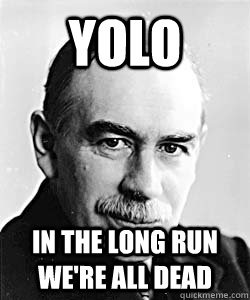
OMFG John Maynard Keynes Was The Ghey!
And apparently even remarking upon this and noting that it might have influenced his economic theories is now something just short of a legal hate crime. Tom Kostigen of the Financial Advisor positively gets the vapors over Niall Ferguson's recent comments to a conference of financial advisors:
Ferguson responded to a question about Keynes' famous philosophy of self-interest versus the economic philosophy of Edmund Burke, who believed there was a social contract among the living, as well as the dead. Ferguson asked the audience how many children Keynes had. He explained that Keynes had none because he was a homosexual and was married to a ballerina, with whom he likely talked of "poetry" rather than procreated. . . . Ferguson . . . says it's only logical that Keynes would take this selfish worldview because he was an "effete" member of society. . . ....This takes gay-bashing to new heights. It even perversely pins the full weight of the financial crisis on the gay community and the barren.
Not only is this intellectually void, it's mad. And anyone with a moral conscience should be outraged. It is one thing to take issue with a society fueled by self interest and one fueled by a larger ethic. But it's entirely vulgar to make this argument about sexual preference -- and to do so glibly.
Kostigen doesn't provide any actual quotes but needless to say Ferguson has been reduced to abject apology in order to keep the PC police at bay.
But Jonah Goldberg points out that this has been a criticism of Keynes in academia going back decades (and that Keynes more or less described himself as a Bloomsbury aesthete):
In fact, something of the "soul" of Bloomsbury penetrated even into Keynes's economic theories. There is a discernible affinity between the Bloomsbury ethos, which put a premium on immediate and present satisfactions, and Keynesian economics, which is based entirely on the short run and precludes any long-term judgments. (Keynes's famous remark. "In the long run we are all dead," also has an obvious connection with his homosexuality - what Schumpeter delicately referred to as his "childless vision.") The same ethos is reflected in the Keynesian doctrine that consumption rather than saving is the source of economic growth - indeed, that thrift is economically and socially harmful. In The Economic Consequences of the Peace, written long before The General Theory, Keynes ridiculed the "virtue" of saving. The capitalists, he said, deluded the working classes into thinking that their interests were best served by saving rather than consuming. This delusion was part of the age-old Puritan fallacy.
But to repeat this observation today is now "gay bashing".
And Mark Steyn who's a well known Keynesian 'basher' and actually met some of the Bloomsbury Group weighs in here.
Posted by: Maetenloch at
06:07 PM
| Comments (498)
Post contains 1790 words, total size 20 kb.
— JohnE. Aglets more...
Posted by: JohnE. at
04:41 PM
| Comments (336)
Post contains 25 words, total size 1 kb.
— Open Blogger For now I'll forcus on IBM PC compatible games and hardware. They're still not impossible to find (at a price), and present a vaguely familiar aspect to anyone who's worked on configuring a modern'ish desktop PC.
In the beginning... there was the IBM model 5150 Personal Computer, at a base price of $1,565 (in a virtually unusable minimalist configuration).
Having an actual IBM PC (5-expansion slots) or XT (8-expansion slots + HDD) is the "gold standard" when it comes compatibility for vintage PC games. Those are the platforms the software was developed and tested on - hard to beat that.
The Intel 8088 microprocessor those machines were fitted with has a few obscure quirks that could thwart attempting to run some of the earliest PC games on faster Intel 80286/80386 and later microprocessors. Most programs won't run into those incompatibilities, but when you do you're at a hard stop without the real thing.
You're probably not going to find too many original PC's and XT's (or even Taiwan clones) out at the curb on garbage day for free anymore; that era started waning about the time the 486 chip showed up. The more likely scenario is you got some old 486 or Pentium class machine stashed in a closet, or find one out at the curb on garbage day pleading for salvation from the smelter or landfill. The original stuff is getting kinda pricy on eBay these days. This 5-slot PC has been bid up over $200 and there's still a few hours to go.
Posted by: Open Blogger at
02:36 PM
| Comments (189)
Post contains 1035 words, total size 6 kb.
— JohnE. Needle-nose pliers. more...
Posted by: JohnE. at
02:32 PM
| Comments (122)
Post contains 14 words, total size 1 kb.
— DrewM Israel seems to have bombed Syria.
Good for them. Also, better them than us.
Posted by: DrewM at
01:06 PM
| Comments (183)
Post contains 18 words, total size 1 kb.
— Gabriel Malor Steven Den Beste sent the following, which I am pleased to publish here for ya'll.
Let's talk about the Third Amendment for a moment. Remember that one? Probably not; in this day and age it's something of a Constitutional joke. "No Soldier shall, in time of peace be quartered in any house, without the consent of the Owner, nor in time of war, but in a manner to be prescribed by law."
Remember now? The Bill of Rights which passed Congress had twelve clauses, and ten of them were almost immediately ratified by the states. Amendment Three was one of those. Why did they bother?
It's because memory of the Revolution was still current. It was only a few years after the Revolution succeeded, remember, and memory of British tyranny was still fresh. The British had done this, and the citizens of the nascent United States wanted to make sure their new government didn't.
The reason the colonies revolted was because the King of England was viewed as having become a tyrant. Having fought a bloody war to become free of his tyranny, the founders wanted to make sure the new government they created did not in turn become tyranny. Trading one tyrant for another wasn't what they had in mind. So the Constitution contains layers of mechanisms to try to prevent tyranny. And the last and best of these is the Second Amendment.
Remember how the shooting revolution began? The Battles of Lexington and Concord. Rebels in the Boston area had been stockpiling weapons, powder, and ammunition near Concord MA, and the British got wind of it and sent an armed column out from Boston to seize the stockpile. Superb espionage by rebel forces detected this, and word spread through the countryside for the militia (remember that word; it's important) which formed up and fought against the British force. The main battle was fought at Lexington MA, which repelled the British and caused them to retreat again back to Boston.
The "militia" was all able bodied men in the area, who were to show up with their own rifles (or muskets). Weapons of that era varied quite a lot, and of course they were muzzle-loaded using black powder. It took a lot of training to use such a weapon effectively (especially rifles, which were much more difficult to load than muskets) and that's why it was desireable that the men have their own weapons. It was assumed they already knew how to use them.
The earliest battles of the revolution were fought by such militia formations. Another was the Battle of Bunker Hill. It was only later that the Revolutionary Army was formed, and began training at Valley Forge.
Having just won their revolution, in which privately owned firearms played such a critical role, and mindful of the potential for their new government to potentially become tyrannical, the purpose of the Second Amendment was to make sure that the people of the United States would have the means to rise in revolt once again, should it become necessary.
That's what it's really about. It's not about hunting weapons; it's not about the "National Guard" (which isn't a militia). It's about everyday law-abiding citizens having the ability to resist a tyrannical government. And with that deterrent in place, we've managed 230 years without our government descending into tyranny (though it's come close).
And that's why Progressives hate it. Deep down, progressives (i.e. socialists) are not populists. Deep down, progressives despise the majority of their fellow citizens, and don't trust them at all. They love America but hate most of the Americans. Progressives are entranced with the possibilities presented by a benevolent dictatorship. They ignore the peril, that it can mutate into a malevolent dictatorship because they believe in their own virtue. They're sure it won't happen if they're in charge. As to Democracy? It's a burden, a barrier; it gives the vote to all the rednecks and knuckle-draggers who have been mislead by the evil capitalists (remember the Doctrine of False Consciousness? Pernicious claptrap, that one, but it has a lot of currency on the left) and will resist the Progressive program even though it's Obviously the right thing to do.
If only Progressives, as an enlightened elite, had the ability to impose their program on the rest of us, eventually we'd come around to their point of view. But that means they need dictatorial power, and Democracy prevents that.
And the last and strongest barrier against the creation of a benevolent dictatorship by the Progressive enlightened elite is that damned Second Amendment, and all those firearms owned by the rednecks and knuckle-draggers.
So let's be clear: Progressives don't fear guns in the hands of criminals, or not very much. It's not about school shootings, either. It's guns in the hands, and homes, of law abiding citizens that Progressives hate. Those are the guns they wish were gone; those are the guns they will try to eliminate if they can. Because those are the guns which stand in the way of them taking over.
Posted by: Gabriel Malor at
08:42 AM
| Comments (361)
Post contains 858 words, total size 5 kb.
44 queries taking 0.4184 seconds, 151 records returned.
Powered by Minx 1.1.6c-pink.

