


February 11, 2014
— Ace Update: Gabe is now live at HuffPo, answering questions about socialized law.
The Washington Free Beacon had a noteworthy scoop about "The Hillary Papers," and, as AllahPundit says, the new information itself cannot be discredited.
So what is MSNBC to do? Well, as they are unable to impeach the actual information, they will just relentlessly impeach the publisher. The below supercut was compiled by the Washington Free Beacon itself, and is amusing.
Well, it's superficially amusing. When you think about it, it's pretty alarming.
Is this what it's come down to? The media used to have at least an interest in preserving their credibility; this would serve to restrain, somewhat, their partisan and ideological leanings.
But on MSNBC -- and increasingly in all the other leftwing media as well -- they are abandoning any restraint at all.
However, some still seem willing to call out their fellow progressives for getting ridiculous about it all. Dylan Byers of Politico, for example, posted this tweet:
the “editor” of the “publication” that “broke” this story
http://t.co/LVfZOA2tV8
— Dylan Byers (@DylanByers) February 11, 2014He's not joining in on the "right-wing" "anti-Clinton" "website" party, I'm 99% sure. He is directly quoting from Joe Klein -- Joe Klein actually says that, all those scare-quotes and all, in the article he's linking. So this seems to be Dylan Byers' offering a "Come on, dude" bit of chiding to Joe Klein.
But meanwhile, at MSNBC, the party is in high gear, led by Mistress of Ceremonies Andrea Mitchell, a real reporter, you know. more...
Posted by: Ace at
11:04 AM
| Comments (409)
Post contains 455 words, total size 4 kb.
— Gabriel Malor Just a heads-up, I will be discussing the concept of socialized law on Huffpost Live this afternoon (WARNING: autoplay video) around 3 or so Eastern with Mike Sacks, Noam Scheiber, and Leah Plunkett.
Scheiber kicked off the issue last week with his column at the New Republic: "The Case for Socialized Law."
Plunkett responded with "Socialize the Law? First Stop Condescending to Non-Corporate Lawyers."
And I responded to Scheiber here and at the Federalist.
Lemme know what you think. Having never done Huffpost Live (or even seen a segment), I have no idea what to expect.
Posted by: Gabriel Malor at
10:20 AM
| Comments (188)
Post contains 106 words, total size 1 kb.
— Gabriel Malor Thought police.
Treasury officials said Monday that businesses will be told to "certify" that they are not shedding full-time workers simply to avoid the mandate. Officials said employers will be told to sign a "self-attestation" on their tax forms affirming this, under penalty of perjury.
Although Treasury and HHS insist that employers are not reducing full-time workers because of Obamacare's obvious and perverse incentives, the beleaguered agencies have decided to require employers to certify that they aren't taking perfectly sensible decisions to preserve and protect their businesses.
This is mindless, arbitrary, and unlawful and I would love for someone at Treasury to point me to the statute that allows them to demand these certifications. I suspect that such a statute does not exist (if nothing else, we would have heard about it before now), and that it would violate the U.S. Constitution for IRS to punish a company for declining to make such a certification.
Employers should not have to deal with the uncertainty and cost of contesting Treasury's unlawful demands. And here's an interesting question: what about those businesses who have already made labor adjustments because of Obamacare? Treasury and HHS, are just piling confusion on more confusion as they attempt to save this fundamentally flawed law.
Let the Democrats try and defend this; I dare them.
Posted by: Gabriel Malor at
09:22 AM
| Comments (389)
Post contains 258 words, total size 2 kb.
— Gabriel Malor Two general proposals were made this week by Republicans in Washington, D.C. for fixing the mess President Obama and the Democrats made of healthcare in this country.
The first up is Sen. Ron Johnson's plan for what we can do while Obama is still in office:
Sen. Ron Johnson presented an extensive PowerPoint proposal to "repair the damage" of Obamacare. Johnson had once hoped to repeal the law but conceded that now, after its implementation, "you don't just wave a wand and repeal it and it goes away." So he is collecting ideas for a bill he hopes would instead remove some of the most problematic parts of Obamacare. Johnson stressed that his proposal, in whatever final form it takes, will not be a systematic replacement but rather a set of individual fixes that could offer relief to some of the Americans most burdened by Obamacare.
Among the ideas he's considering are doing away with the individual and employer mandates, creating a "true grandfather clause" to let people keep their insurance if they like it, allowing any state that chooses to simply opt out, ending the bailouts for the insurance companies and ending the tax penalty for people who buy insurance on the individual market, allowing the sale of insurance across state lines, and creating high-risk pools to insure people with preexisting conditions.
Johson's plan is pretty straightforward. Obamacare is deeply unpopular, but Obama isn't going to allow its repeal while he is in office. So the GOP should press its advantage by offering small, popular ideas to replace the worst parts of Obamacare. In particular, many Democrats are running on the claim that they want to "fix" Obamacare. The idea is to make them put up or shut up.
Johnson acknowledges that this is just the limit of what can be done so long as Obama refuses to budge. Johnson notes that other parts of Obamacare will have to be transitioned out of existence (he names the subsidies) after the President is gone.
That's on the Senate side. On the House side, conservative Reps. Tom Price and Mike Roe outlined their plan to replace Obamacare.
And physician Reps. Tom Price (R-Ga.) and Phil Roe (R-Tenn.) promoted their ideas for tackling a long-running conservative priority: replacing President Obama’s healthcare law with a system that allows people to buy health insurance across state lines and take it from job to job, that reduces “defensive medicine” through tort reform, and that expands health savings accounts.
Price acknowledges, however, that this isn't happening until after Obama is gone:
But Price cautioned the new system he envisioned was, practically speaking, years away.Obama, he said, is “not going to sign a bill to repeal his signature legislation.”
“What will happen, I believe firmly, is that in three to five years, we won’t be living under this law,” Price added.
I'd love to see the Democrats forced into some hard votes on this craptastic law.
Posted by: Gabriel Malor at
08:30 AM
| Comments (272)
Post contains 500 words, total size 3 kb.
— DrewM Peter Wehner and Michael Gerson are two liberals pretending to be conservatives. They are veterans of the George W. Bush who are working very hard to bring back "compassionate conservatism" and present it as actual conservatism. You can read about Wehner's inability to understand conservatism here, Gerson's announcement that the GOP needs to become more liberal to attract amnestied Hispanics here. Most recently the duo combined to write a long and tedious piece about how conservatives need to give up on the idea of limited government and embrace the supposed constitutional underpinnings of the modern welfare state.
Charles Cooke and Wehner have been engaging in a back and forth about the Wehner/Gerson model for understanding the Constitution.
In his reply to Cooke, Wehner gives up the game that he actually believes in enumerated powers or constitutional restraints on the government.
As for the charge of embracing a “living Constitution”: It is one thing, and I believe quite a problematic thing, for judges to invent and create and impose on the public invented rights. But in the representative democracy the founders created, they certainly believed that within certain parameters the will of the people, ratified in election after election and by Congress after Congress, needed to be taken into account.
So if enough people vote for something often enough the Constitution doesn't matter. This would be the opposite of the point of having a Constitution. Some things are beyond the reach of the majority.
We can talk about the political realities of repealing Social Security another time (spoiler: math will do it for us) but the supposed principle Wehner lays down is not a principle in any recognized sense.
This is my problem with people like Wehner, Gerson and Andrew Sullivan...they conflate their personal views with what is right, necessary and ultimately, constitutional. They then go about privileging their personal predilections with all sorts of protections and erecting hurdles others might overcome to challenge their ideal policies.
Here's my test to determine how serious someone is about the Constitution...name a policy you would like to see either enacted or outlawed that is not supported by the Constitution and then admit it. I don't mean something silly like "I hate broccoli and think it should be outlawed" but something that goes to the heart of your politics and beliefs.
One example is some pro-life people admit the Constitution is silent on abortion and that a Right to Life amendment would be necessary to outlaw it at the federal level. This is a principled position that doesn't assert that using the tools of the left, usurping political power with the judicial.
Personally, I'm very concerned about the encroaching surveillance state. I hate those licence plate readers that police and other government agencies are using. I am very worried about the proliferation of "security" cameras and things like facial recognition software. What I can't do is figure out a legitimate constitutional argument against their use (at least as we currently know they are being used).
Do I think that we should elect people who will minimize, if not eliminate, these kinds of things? Yes because that's a policy question and that's for a elected officials to decide and be held accountable for.
If I took the Wehner/Gerson model I'd go about finding reasons why they should be found unconstitutional. All I'd need is a few nifty quotes from some founders and presto-chango! My preferred outcome wouldn't be the subject of mere politics but a bedrock constitutional principle that you all must respect and adapt to.
No matte what they might say the Wehner/Gerson approach has no limits to it. Why if we can just get enough votes we might be able to pass a law that Wehner/Gerson can no long publish their nonsense. Sure it would violate the First Amendment but according to their "principles" that doesn't matter.
Hey, maybe there approach isn't so bad after all.
Nah, loathe them as I do, my principles are more important to me than they are.
Posted by: DrewM at
07:08 AM
| Comments (267)
Post contains 687 words, total size 5 kb.
— Open Blogger But it doesn't hurt a potential Republican Presidential candidate so it really isn't worth coverage in the national media. Thankfully the local media continues to dig.
The story behind the massive failure of the Oregon health exchange website continues to unravel as allegations of fraud and gross mismanagement mount.Local news agencies have obtainedemails and other reports suggesting state officials lied about the progress of the website, possibly even creating dummy sites to present to federal officials.
“It’s a scandal much worse than New Jersey,” said state GOP representative Dennis Richardson, who is running for governor against incumbent Democrat Gov. John Kitzhaber.
The issue is starting to bubble up to Capitol Hill. Richardson is calling for an audit of the program by the federal Government Accountability Office. That push would likely come from Rep. Greg Walden (R., Ore.), the only Republican in the Oregon delegation.
A spokesman for Walden said the congressman is “aggressively pursuing” more information about the botched rollout of the website.
“Greg is very concerned about failure of Cover Oregon,” a spokesman for Walden said in a statement to the Free Beacon. “The breakdown of the exchange is unacceptable, and taxpayers deserve accountability for the more than $300 million the federal government has given the state.”
OregonÂ’s health care exchange recently announced it has enrolled more than 100,000 people, which is impressive considering not a single one enrolled through the exchange website.
Posted by: Open Blogger at
05:38 AM
| Comments (265)
Post contains 259 words, total size 2 kb.
— Gabriel Malor Happy Tuesday.
Transparency! On Monday, Labor Department officials blocked a reporter from a public event because they didn't want him asking unapproved questions of Sec. Tom Perez.
Rep. Cantor's office on the the latest unilateral, unlawful Obamacare delay:
Another day, another delay. This should be ObamaCare's new logo: pic.twitter.com/4HGd4zXkMk
— Eric Cantor (@EricCantor) February 10, 2014Our own Slublog also responded, the way only he can:
Ahem. Fixed. pic.twitter.com/yClxFf8jmv
— Slublog (@Slublog) February 11, 2014David Freddoso thinks "the case of the missing jobs" explains the latest Obamacare delay. Also, note his prediction at the bottom.
I thought this was well-known, but my friend tells me that the "stand down" order has become the commonly-held, but inaccurate conventional wisdom about Benghazi.
Posted by: Gabriel Malor at
02:51 AM
| Comments (367)
Post contains 132 words, total size 2 kb.
February 10, 2014
— Maetenloch
Least Effective Member of Congress Ever?
Quite possibly. New Jersey could have picked a random person out of the phone book and probably done better than Rep. Robert E. Andrews (D., N.J.). Over his twenty year career in Congress he has proposed 646 bills and gotten exactly 0 passed.
In his 23 years in Congress, Rep. Robert E. Andrews (D., N.J.) has written 646 different pieces of legislation. That is a vast array of bills, covering a vast number of subjects: children's pajamas, relations with Taiwan, commemorative coins and trade duties on licorice.
But all of Andrews's bills had one thing in common. They didn't become law. [.]
Andrews, 56, said Tuesday he would resign in two weeks, taking a position at the law firm Dilworth Paxson. In an interview Tuesday, he insisted that these statistics don't capture his true record in Congress.
Now I'd be happy if each member of Congress swore to propose no more than five bills a year but if over two decades in office you couldn't even get a single local federal courthouse named or one limited edition commemorative coin issued, you just might be a complete failure at your job.

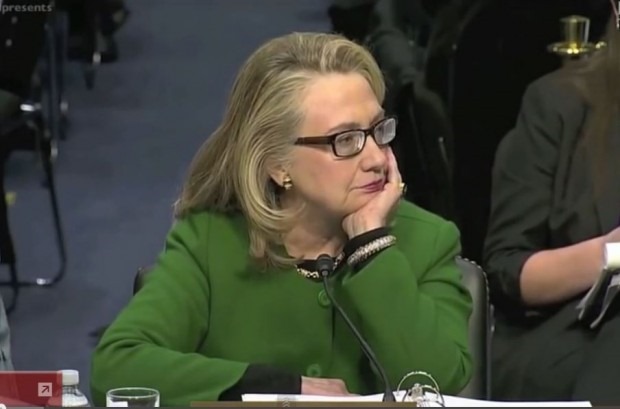
Hillary Was Always the Hillary We've Come to Know
Bitter, nasty, utterly political, and dishonest as recounted in the papers of her long-time best friend, Prof. Diane Blair, who died in 2000.
Posted by: Maetenloch at
06:44 PM
| Comments (569)
Post contains 1174 words, total size 13 kb.
— rdbrewer

He's gonna pounce!
Posted by: rdbrewer at
03:25 PM
| Comments (231)
Post contains 7 words, total size 1 kb.
— LauraW Well, we should. Some of us don't. But we should.
But itÂ’s also possible to argue that as a rich, post-scarcity society, we shouldnÂ’t really care that much about whether the poor choose to work. The important thing is just making sure they have a decent standard of living, full stop, and if they choose Keynesian leisure over a low-paying job, thatÂ’s their business.
No, actually. No. It is not possible to argue this in front of anyone with a functioning brain, for more than three seconds.
Here's why: first of all, even conceding the very strange new notion that we are so wealthy we can let much of the population loaf, there is a thing on this planet we call adversity. Bad things happen. Industrial accidents, floods, economic devastation, massive crop failures, earthquakes, terrorist attacks. And so on.
Stores of excess wealth and widespread economic independence are good and necessary attributes to possess, when adversity strikes.
Douthat's assumption is that this is a time of plenty and things will carry on this way forever. This assumption has had a 100% guaranteed failure rate over the entire course of human history and will fail quite reliably in the future, probably very much sooner than we would like.
Dependents, or 'poor people' in Douthat's formulation, are absolutely defined by their inability to handle adversity. They have no stores of wealth. They cannot do a thing to help themselves, and this is a problem when adversity inevitably happens and the hands of capable people are full.
While the enormous wealth of a rich country may be able to keep millions of people floating on the dole for a good while in good times, bad times are another thing entirely. What you want when the sh*t hits the fan is a lot of scrappy individualists with skills and instincts and a productive acumen. People who are independent and helping themselves, their communities, and each other, directly.
Not a massive burden of helpless dependents, and its attendant slow, resource-hogging bureaucracy. The presence of a lot of dependents is not helpful when the prosperity of the country is not-so-prosperous, never mind downright endangered.
But against Douthat's central assumption is this; we are massively in debt as a nation. How can he say we can afford for people to loaf, when at the same time we are counting on their future productivity to pay down these bills? I'm at a loss to explain this massive oversight of logic.
And Douthat doesn't refer to these people as actually unable to work. He just says they are poor. So he's not talking about the profoundly disabled or infirm - people for whom publicly financed social services were originally intended. He's just talking about people who don't have enough money. Well how are they supposed to ever elevate themselves from this condition, unless they are encouraged or incentivized to work?
Douthat's assertion is nothing less than a green light for the continued willful and wide destruction of human potential. As if we haven't had enough of that in the last fifty years! Incentive is the mother of achievement, for almost all people. Remove the incentive, you destroy the potential greatness of the individual, and the future society that depends on such individuals, right in the cradle.
Finally there is the implicit insult in Douthat's assertion. The best way for me to elucidate this insult is to ask a question.
Faced with choosing between work, or being perpetual state-financed layabouts, what do you think Mr. Douthat would encourage his own children to do?
This is where cute philosophical fancies about 'the masses' crash with personal reality. Does anyone seriously think someone like Douthat would portray a life on the dole as an attractive lifestyle choice, to his own kids? I sincerely doubt it.
If some can be counted on to tell their own kids to go forth and achieve, while simultaneously telling others that they can sit home and collect a check, what is the real message here?
That it is hunky-dory if *you* never grow, earn, or discover the boundaries of your own success. We never really thought you had it in you, anyway.
Very sh*tty sentiment. Extremely so.
__________________
Just an aside: I asked the cobs what they thought of the Douthat column.
Dave in Texas:
Near as I can tell, the only point of this column is to be something that's supposed to sound smart to readers of the NYT. It's smart-sounding gibberish.
Gabriel:
I'm sorry, I couldn't really concentrate on it. I have no idea what it's about. It was boring.
Andy:
Rabbish!!!
When you realize you wasted hundreds of words on nothing.
Oh well.
At least it kept you and me occupied for a minute, right? Right.
Posted by: LauraW at
04:38 PM
| Comments (335)
Post contains 808 words, total size 5 kb.
44 queries taking 0.3037 seconds, 151 records returned.
Powered by Minx 1.1.6c-pink.

